Water is the lifeblood of agriculture. No matter the size of your operation—whether you’re managing a few acres or running a large commercial farm—the irrigation system you choose can directly impact crop yield, soil health, operating costs, and long-term sustainability. Selecting the right irrigation system is not just a technical decision; it’s a strategic one that affects profitability, efficiency, and resilience in the face of climate variability.
In this in-depth guide, we’ll walk through everything you need to know about choosing the right irrigation system for your farm. We’ll explore different irrigation methods, compare their advantages and disadvantages, and help you match the right system to your crops, soil, climate, and budget. By the end, you’ll have a clear, practical understanding of how to make the best possible choice for your unique farming needs.
Understanding the Importance of the Right Irrigation System
An irrigation system does more than deliver water—it shapes how plants grow, how nutrients are absorbed, and how efficiently resources are used. A poorly chosen system can lead to water waste, uneven crop growth, soil erosion, and increased energy costs. On the other hand, the right irrigation system can improve water-use efficiency, boost yields, and reduce labor demands.
Modern agriculture faces increasing pressure from water scarcity, rising energy prices, and unpredictable weather patterns. Choosing an irrigation system that aligns with these realities is essential for long-term success. Farmers who invest in the right system early often see better returns and fewer operational headaches down the line.
Key Factors to Consider Before Choosing an Irrigation System
Before diving into specific irrigation types, it’s critical to evaluate the unique conditions of your farm. No single irrigation system is perfect for every situation.
Farm Size and Layout
The size and shape of your land play a major role. Large, flat fields may benefit from mechanized systems, while smaller or irregular plots often require more flexible solutions. Slopes, field boundaries, and access points all influence system feasibility.
Crop Type and Growth Requirements
Different crops have different water needs. Row crops, orchards, vineyards, and vegetables all respond differently to irrigation methods. Some crops thrive with frequent, light watering, while others prefer deeper, less frequent irrigation.
Soil Type and Drainage
Soil texture affects how water moves and is retained. Sandy soils drain quickly, while clay soils hold water longer. Understanding your soil’s water-holding capacity helps determine how much water should be applied and how often.
Climate and Weather Patterns
Rainfall, temperature, humidity, and wind all affect irrigation efficiency. In dry, windy climates, certain systems lose more water to evaporation, while in humid regions, over-irrigation can cause disease.
Water Source and Availability
Your water source—whether it’s groundwater, surface water, or harvested rainwater—determines flow rates, pressure, and reliability. Limited water availability may push you toward more water-efficient irrigation systems.
Budget and Operating Costs
Initial installation costs are important, but so are long-term expenses like energy consumption, maintenance, and labor. A cheaper system upfront may cost more over time.
Overview of Common Farm Irrigation Systems
Understanding the main irrigation systems available today is the foundation for making an informed decision. Each system has its own strengths and limitations.
Surface Irrigation Systems
Surface irrigation is one of the oldest and most widely used methods worldwide. It relies on gravity to distribute water across the field.
How Surface Irrigation Works
Water flows over the soil surface through furrows, basins, or borders, gradually soaking into the ground. This method is commonly used for crops like rice, wheat, and sugarcane.
Advantages of Surface Irrigation
Low initial investment
Simple technology with minimal equipment
Suitable for areas with abundant water supply
Disadvantages of Surface Irrigation
Low water-use efficiency
Uneven water distribution
Higher risk of soil erosion and nutrient runoff
Surface irrigation works best on level fields with uniform soil and where water availability is not a limiting factor.
Sprinkler Irrigation Systems
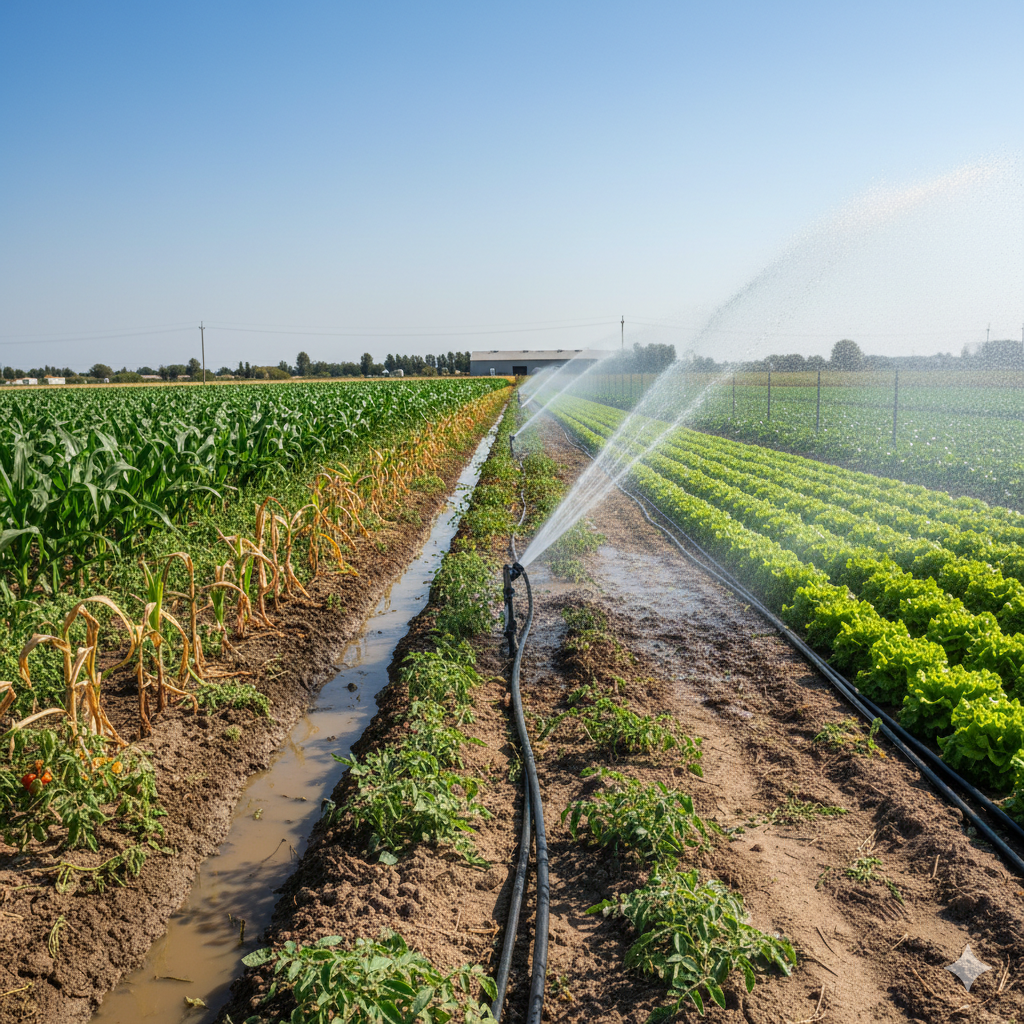
Sprinkler irrigation mimics natural rainfall by spraying water through pressurized nozzles.
Types of Sprinkler Systems
Portable sprinkler systems
Solid-set systems
Center pivot irrigation
Lateral move systems
Benefits of Sprinkler Irrigation
More uniform water distribution
Suitable for various soil types
Can be used on uneven terrain
Limitations of Sprinkler Irrigation
Higher energy requirements
Water loss due to evaporation and wind drift
Initial installation can be costly
Sprinkler systems are popular for row crops, pastures, and field crops, especially in areas with moderate wind conditions.
Drip Irrigation Systems
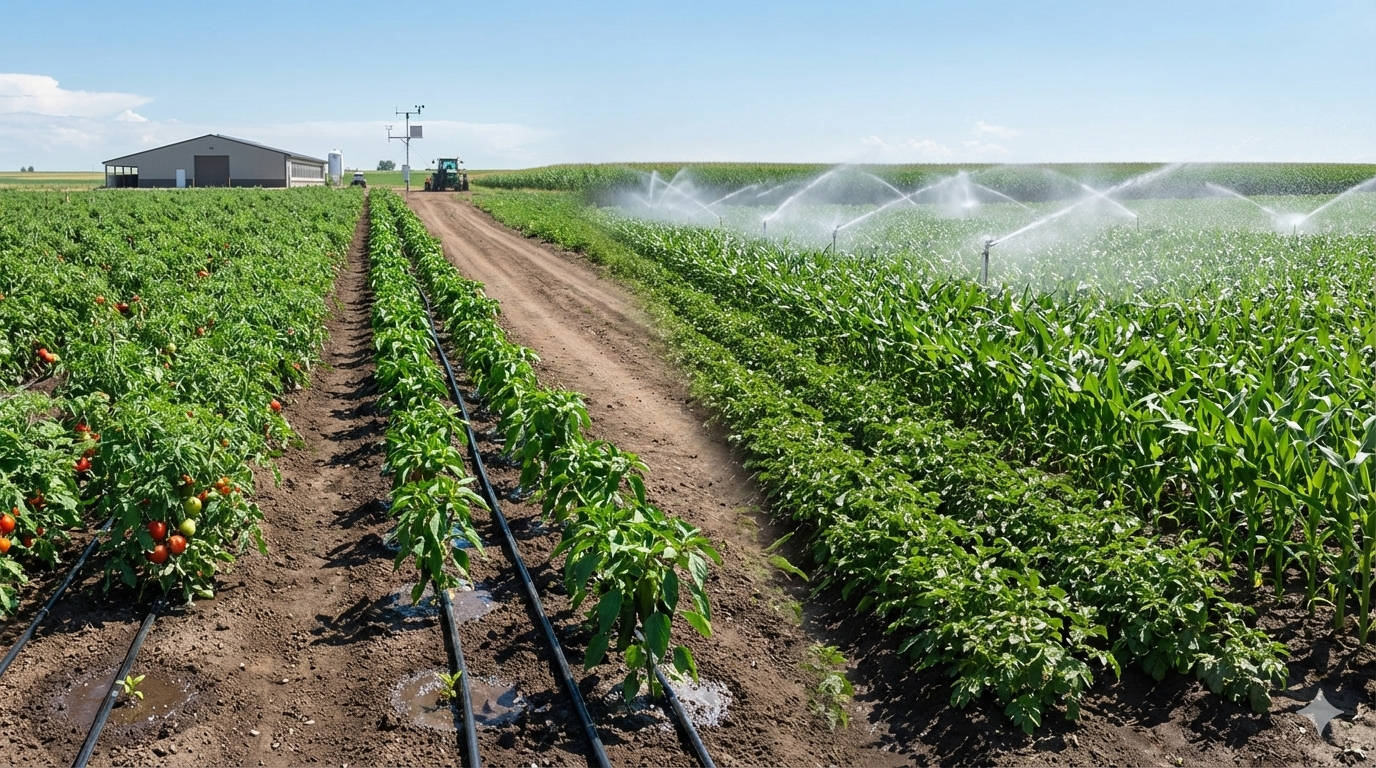
Drip irrigation delivers water directly to the plant’s root zone through a network of tubes and emitters.
How Drip Irrigation Works
Water is applied slowly and precisely, reducing waste and maximizing absorption. This method is widely used in vegetable production, orchards, and vineyards.
Advantages of Drip Irrigation
Exceptional water efficiency
Reduced weed growth
Lower disease pressure on crops
Precise nutrient delivery through fertigation
Disadvantages of Drip Irrigation
Higher upfront costs
Requires regular maintenance to prevent clogging
Not ideal for all crop types
Drip irrigation is often considered the gold standard for farms focused on water conservation and high-value crops.
Subsurface Drip Irrigation (SDI)
Subsurface drip irrigation is a specialized form of drip irrigation where lines are buried below the soil surface.
Benefits of Subsurface Drip Irrigation
Minimal evaporation losses
Improved root development
Reduced surface runoff
Challenges of Subsurface Drip Irrigation
Difficult to monitor and repair
Higher installation costs
Requires precise design and management
SDI is best suited for long-term cropping systems where fields remain in the same layout for many years.
Center Pivot Irrigation Systems
Center pivot systems consist of long pipelines mounted on towers that rotate around a central point.
Why Farmers Choose Center Pivot Irrigation
Ideal for large-scale farming
Automated and labor-efficient
Consistent application over large areas
Drawbacks of Center Pivot Systems
High capital investment
Circular irrigation pattern may not match field shape
Requires reliable power source
Center pivot irrigation is widely used for corn, soybeans, and wheat in large, flat fields.
Micro-Sprinkler Irrigation Systems
Micro-sprinklers apply water in small, controlled sprays close to the ground.
Key Benefits of Micro-Sprinklers
More efficient than traditional sprinklers
Good coverage for tree crops
Lower operating pressure
When to Use Micro-Sprinklers
This system works particularly well in orchards, nurseries, and plantations where targeted watering is needed.
Matching Irrigation Systems to Crop Types
Choosing the right irrigation system means aligning it with the biological needs of your crops.
Row crops often benefit from sprinkler or center pivot systems
Vegetables and berries thrive with drip irrigation
Orchards and vineyards perform well with drip or micro-sprinklers
Rice and flood-tolerant crops are suitable for surface irrigation
Understanding crop water requirements helps prevent over-irrigation and under-irrigation, both of which can reduce yields.
Water Efficiency and Sustainability Considerations
Water efficiency is no longer optional—it’s essential. Efficient irrigation systems help conserve water while maintaining productivity.
Reducing Water Waste
Drip and micro-irrigation systems minimize losses from evaporation and runoff. Automated scheduling further improves efficiency.
Environmental Impact
Efficient irrigation reduces nutrient leaching, protects groundwater, and supports healthier ecosystems.
Long-Term Farm Sustainability
Investing in a water-efficient irrigation system helps future-proof your farm against droughts, regulations, and rising water costs.
Automation and Smart Irrigation Technologies
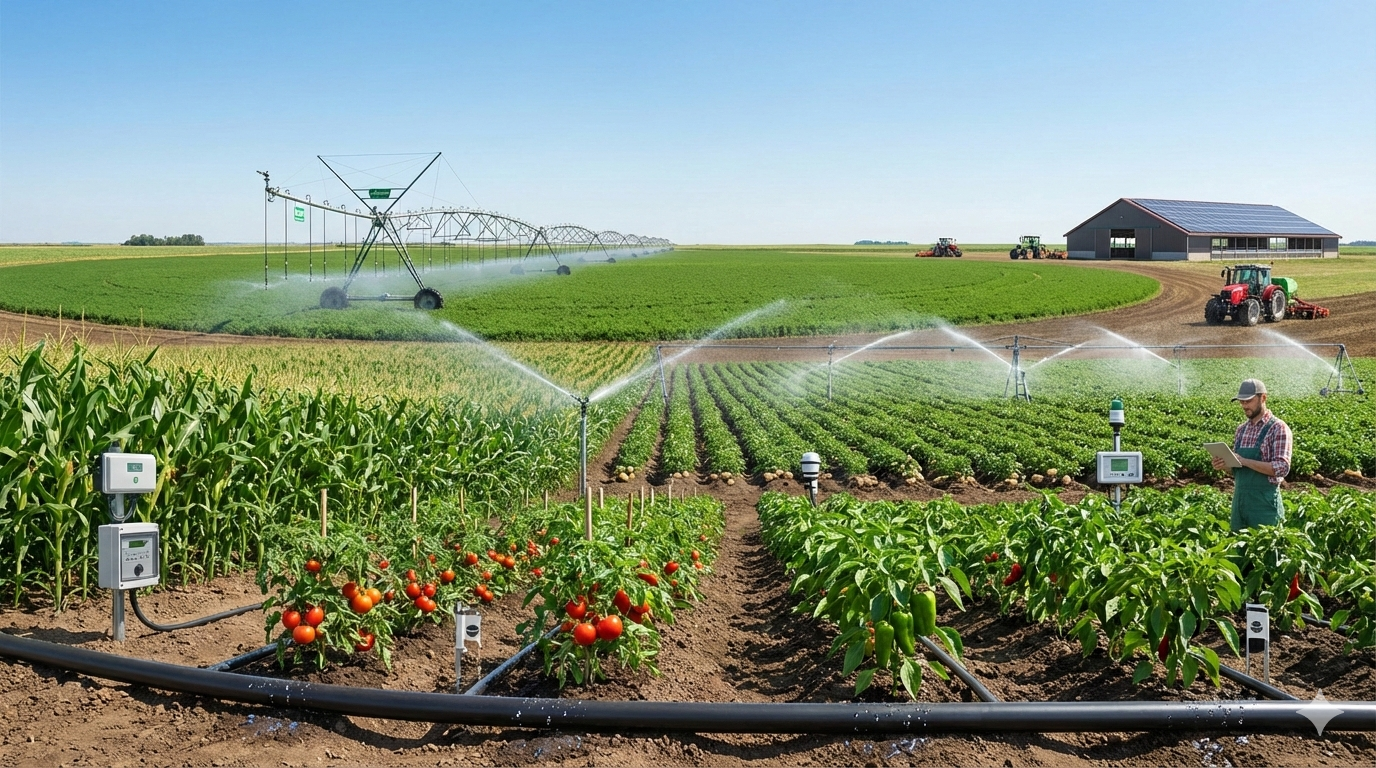
Modern irrigation systems can be integrated with smart technology for better control and efficiency.
Soil Moisture Sensors
These sensors provide real-time data, allowing precise irrigation scheduling.
Automated Controllers
Automation reduces labor and ensures consistent watering, even during peak seasons.
Data-Driven Decision Making
Smart irrigation systems help farmers optimize water use based on actual crop needs rather than guesswork.
Installation, Maintenance, and Operating Costs
An often-overlooked aspect of choosing an irrigation system is understanding the total cost of ownership.
Installation Costs
Some systems require significant upfront investment, including pumps, pipes, and filtration.
Maintenance Requirements
Regular maintenance prevents breakdowns and ensures consistent performance.
Energy Consumption
Pumping and pressurizing water can be expensive. Energy-efficient systems help control long-term costs.
Common Mistakes to Avoid When Choosing an Irrigation System
Many farmers make costly mistakes during the selection process.
Choosing based on price alone
Ignoring soil and crop requirements
Underestimating maintenance needs
Failing to plan for future expansion
Avoiding these pitfalls can save time, money, and frustration.
How to Make the Final Decision
The best irrigation system is one that balances efficiency, cost, crop needs, and long-term goals. Consulting with irrigation specialists, conducting soil tests, and analyzing water availability all contribute to a smarter decision.
Take the time to evaluate multiple options and consider how your farm may evolve over the next 5–10 years. A flexible, scalable system often provides the greatest value.
Conclusion
Choosing the right irrigation system for your farm is one of the most important decisions you’ll make as a grower. The right system can maximize yields, conserve water, reduce operating costs, and support sustainable farming practices. By carefully considering your farm’s size, crops, soil, climate, and budget—and by understanding the strengths and limitations of each irrigation method—you can make a confident, informed choice.
In a world where water resources are increasingly precious, investing in the right irrigation system isn’t just good farming—it’s smart business. Take the time to choose wisely, and your farm will reap the benefits for years to come.