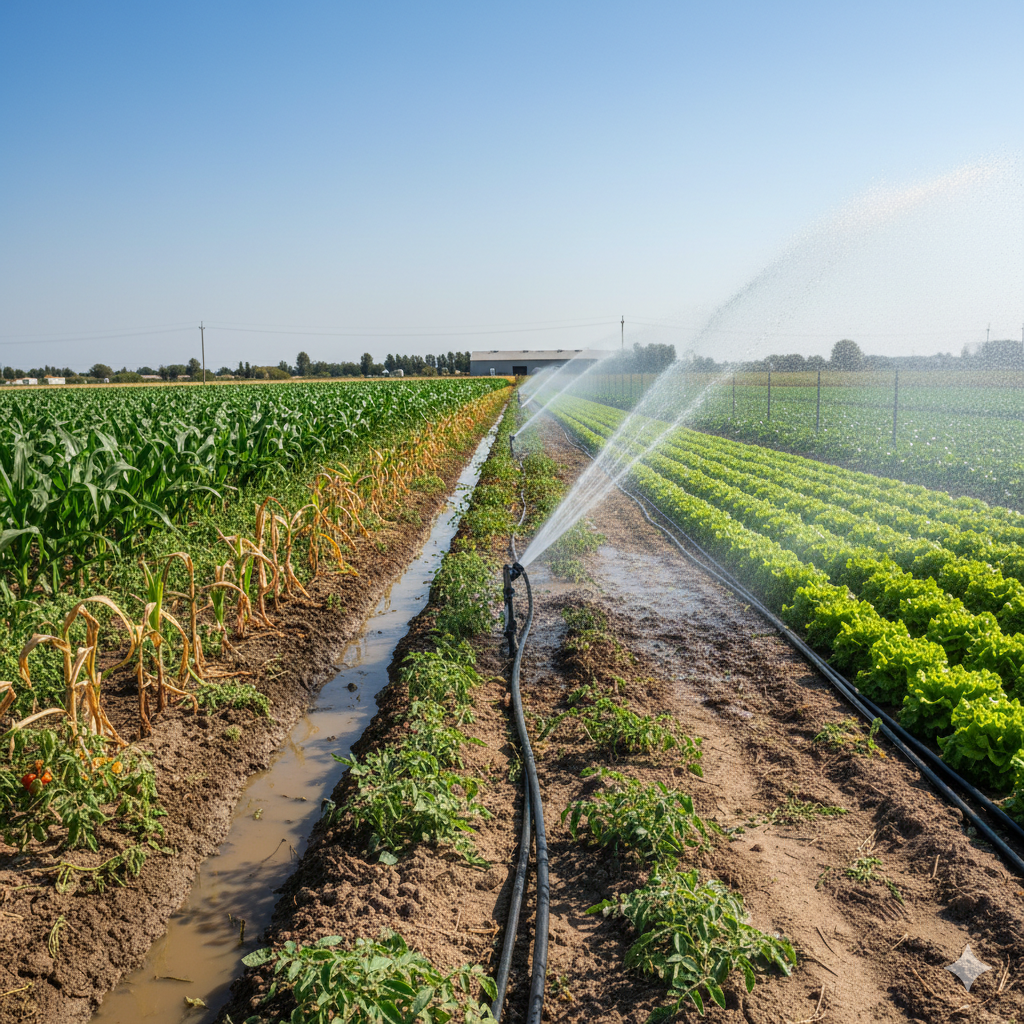
Why Irrigation Mistakes Can Cost Farmers More Than Water
Irrigation is meant to support crop growth, not silently drain profits. Yet many farmers—both new and experienced—make irrigation mistakes that lead to water waste, poor yields, higher energy bills, soil damage, and long-term productivity loss.
The problem is not always the irrigation system itself, but how it is planned, managed, and maintained. Even modern systems like drip and sprinkler irrigation can fail if used incorrectly.
In this guide, we’ll cover the most common irrigation mistakes farmers should avoid, explain why they happen, and show practical ways to fix them before they impact your farm’s performance.
Over-Irrigation: More Water Does Not Mean Better Crops
One of the most widespread irrigation mistakes is applying too much water.
Why Over-Irrigation Is a Problem
Reduces oxygen in the root zone
Encourages root rot and fungal diseases
Leaches nutrients below root depth
Increases weed growth
Wastes water and energy
Many farmers assume crops will grow faster with more water, but in reality, over-irrigation stresses plants and lowers yields.
How to Avoid Over-Irrigation
Follow crop-specific water requirements
Use soil moisture monitoring
Irrigate based on need, not habit
Under-Irrigation: Starving Crops of Essential Moisture
While over-irrigation is common, under-irrigation can be just as damaging.
Effects of Under-Irrigation
Poor plant growth
Reduced flowering and fruiting
Smaller yields
Crop stress during critical growth stages
Under-irrigation often happens due to poor scheduling or uneven water distribution.
How to Fix Under-Irrigation
Identify critical growth stages
Ensure uniform water application
Adjust irrigation frequency during hot or dry periods
Ignoring Soil Type When Planning Irrigation
Not all soils behave the same, yet many irrigation plans treat them equally.
Why Soil Type Matters
Sandy soils drain quickly
Clay soils retain water longer
Loamy soils balance drainage and retention
Ignoring soil type can cause runoff, waterlogging, or deep percolation losses.
Best Practice
Test your soil
Adjust irrigation duration and frequency
Match irrigation system to soil characteristics
Poor Irrigation Scheduling
Irrigating at the wrong time is a silent yield killer.
Common Scheduling Mistakes
Watering during the hottest part of the day
Using fixed schedules regardless of weather
Ignoring rainfall
These mistakes increase evaporation and reduce water efficiency.
Smarter Scheduling Tips
Irrigate early morning or late evening
Adjust schedules based on climate conditions
Use weather-based or smart controllers
Choosing the Wrong Irrigation System
Many farmers select irrigation systems based only on initial cost or convenience.
Why This Is a Costly Mistake
Low efficiency
High operating costs
Poor crop performance
Increased maintenance
For example, using sprinklers where water is scarce or drip systems where crops change frequently can backfire.
How to Avoid This Mistake
Match the system to crop type
Consider water availability
Plan for long-term farm goals
Uneven Water Distribution Across the Field
Uneven irrigation means some plants get too much water while others get too little.
Causes of Uneven Distribution
Clogged drip emitters
Worn sprinkler nozzles
Poor system design
Pressure differences
Uneven watering leads to uneven crop growth and inconsistent yields.
Solutions
Regularly inspect emitters and nozzles
Use pressure regulators
Flush irrigation lines periodically
Neglecting Irrigation System Maintenance
Many irrigation problems start small and worsen due to lack of maintenance.
Common Maintenance Mistakes
Ignoring leaks
Skipping filter cleaning
Delaying repairs
Using damaged pipes or fittings
A poorly maintained system wastes water and increases costs.
Preventive Maintenance Tips
Inspect systems regularly
Clean filters and screens
Repair leaks immediately
Not Monitoring Water Pressure
Incorrect water pressure can reduce irrigation efficiency.
Problems Caused by Low or High Pressure
Low pressure leads to poor coverage
High pressure damages pipes and emitters
Uneven water application
Pressure issues often go unnoticed but cause long-term system damage.
Best Practices
Install pressure gauges
Use pressure regulators
Monitor system performance frequently
Ignoring Crop Growth Stages
Crops do not need the same amount of water throughout their life cycle.
Why Growth Stages Matter
Seedling stage needs light, frequent watering
Flowering and fruiting stages need consistent moisture
Maturity stage may require reduced irrigation
Applying the same irrigation schedule throughout the season leads to inefficiency and yield loss.
Smart Irrigation Approach
Adjust irrigation as crops grow
Focus on critical growth stages
Monitor plant stress indicators
Failing to Use Fertigation Correctly
Fertigation is powerful, but when misused, it causes damage.
Common Fertigation Mistakes
Over-applying fertilizers
Uneven nutrient distribution
Using incompatible fertilizers
This leads to nutrient burn, poor uptake, and soil imbalance.
Best Practices for Fertigation
Apply nutrients in small, controlled doses
Use water-soluble fertilizers
Flush systems after fertigation
Poor Drainage Management
Irrigation without proper drainage creates serious problems.
Effects of Poor Drainage
Waterlogging
Root suffocation
Increased disease pressure
Soil structure damage
Even efficient irrigation systems fail if drainage is ignored.
How to Improve Drainage
Level fields properly
Use raised beds where needed
Maintain drainage channels
Overlooking Automation and Monitoring Tools
Many farmers still rely only on manual judgment.
Why This Is a Mistake
Inconsistent irrigation
Delayed response to crop stress
Higher labor costs
Modern tools can dramatically improve efficiency.
Tools Worth Using
Soil moisture sensors
Automated irrigation controllers
Smart irrigation apps
These tools help irrigate based on data, not guesswork.
Not Planning for Water Scarcity
Water availability is becoming unpredictable.
Risks of Poor Planning
Crop loss during drought
Regulatory restrictions
Rising water costs
Farms without a water management plan are vulnerable.
Smart Planning Strategies
Improve water-use efficiency
Invest in water-saving systems
Store and reuse water where possible
Copying Irrigation Practices From Other Farms
What works for one farm may not work for another.
Why This Approach Fails
Different soil types
Different crops
Different climate
Different water sources
Blindly copying practices often leads to failure.
Better Approach
Evaluate your own farm conditions
Test and adjust gradually
Seek expert guidance when needed
Common Irrigation Mistakes Summary
The most damaging irrigation mistakes usually involve:
Poor planning
Lack of monitoring
Ignoring soil and crop needs
Skipping maintenance
Avoiding these mistakes can significantly improve water efficiency, crop health, and farm profitability.
Conclusion
Irrigation can be a powerful tool or a costly problem—it all depends on how it’s managed. The most common irrigation mistakes farmers should avoid are often simple but expensive when ignored. Over-irrigation, poor scheduling, wrong system selection, and lack of maintenance can quietly reduce yields and waste valuable resources.
By understanding your soil, crops, climate, and water supply, maintaining your irrigation system, and adopting smarter irrigation practices, you can avoid these mistakes and build a more efficient, resilient farming operation.
Smart irrigation isn’t about using more water—it’s about using water wisely.