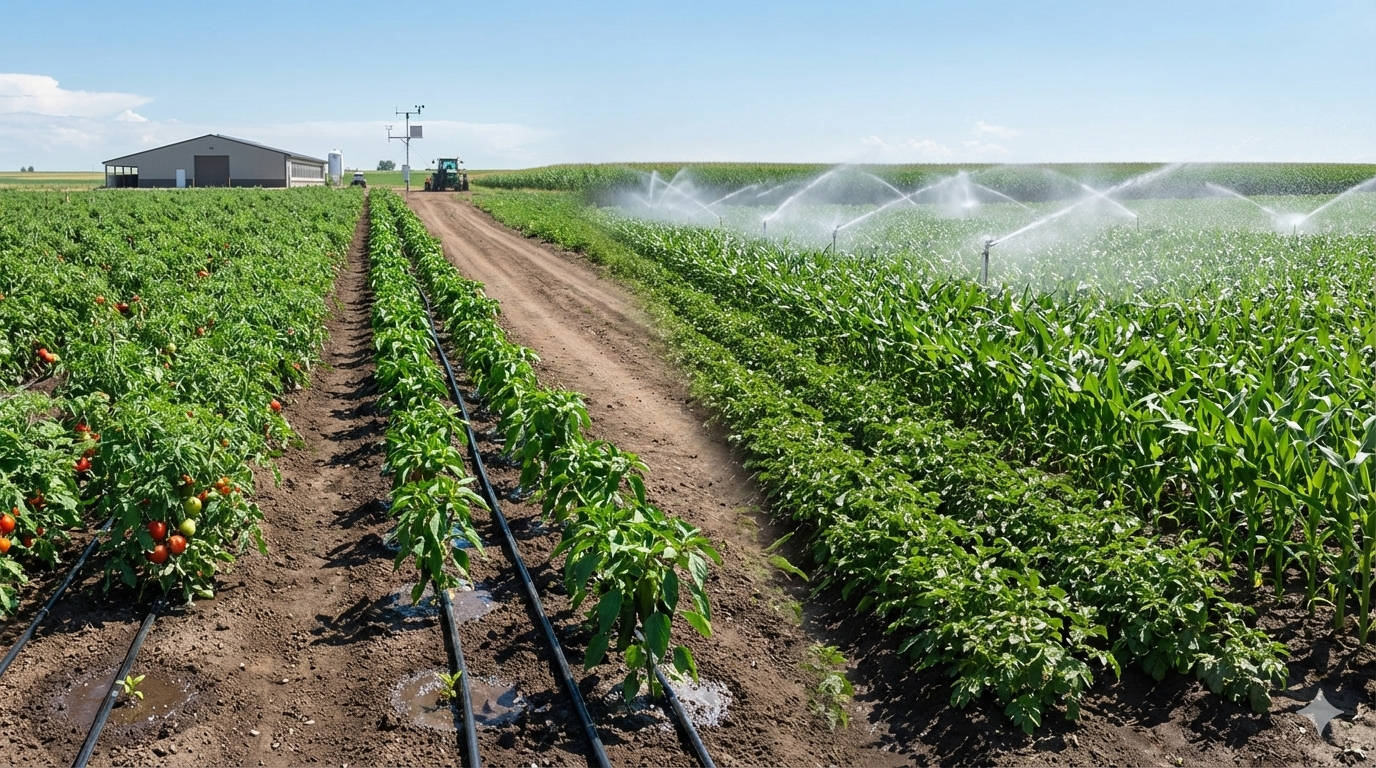
Drip and Sprinkler Irrigation
Choosing the right irrigation method is one of the most important decisions a farmer can make. Water directly affects crop yield, soil health, production costs, and long-term sustainability. Among modern irrigation methods, drip irrigation and sprinkler irrigation are the two most widely used systems across farms of all sizes.
But the big question remains: which one works better—drip or sprinkler irrigation?
The answer depends on multiple factors including crop type, farm size, climate, soil conditions, and budget.
In this detailed guide, we’ll break down drip vs sprinkler irrigation, compare their performance, costs, efficiency, and suitability, and help you decide which system is best for your farm.
What Is Drip Irrigation?
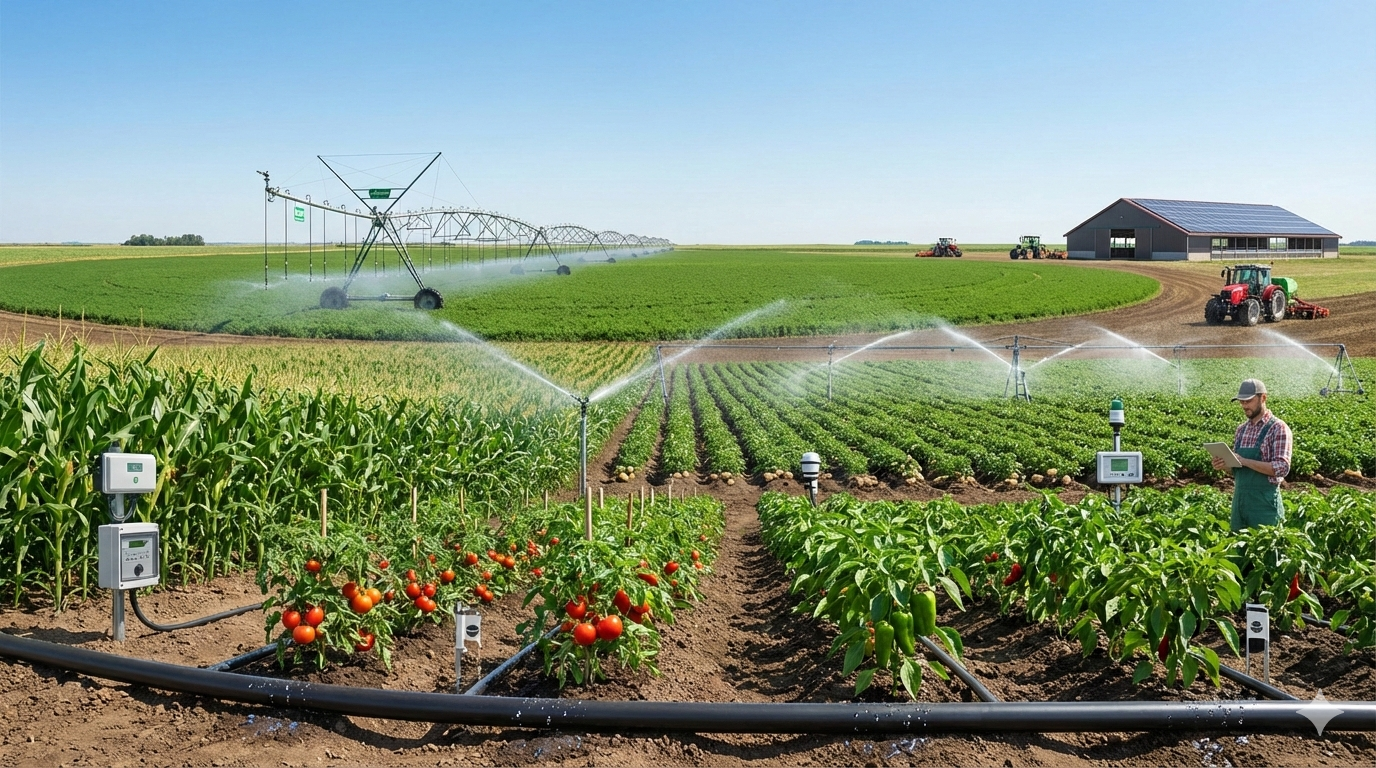
Drip irrigation is a micro-irrigation system that delivers water slowly and directly to the plant’s root zone through pipes, tubes, and emitters.
Instead of watering the entire field, drip irrigation focuses only on the areas where plants actually need water.
How Drip Irrigation Works
Water flows through a network of:
Mainlines and sub-mainlines
Drip tubes or tapes
Emitters placed near plant roots
The system releases water drop by drop, ensuring maximum absorption and minimal waste.
What Is Sprinkler Irrigation?
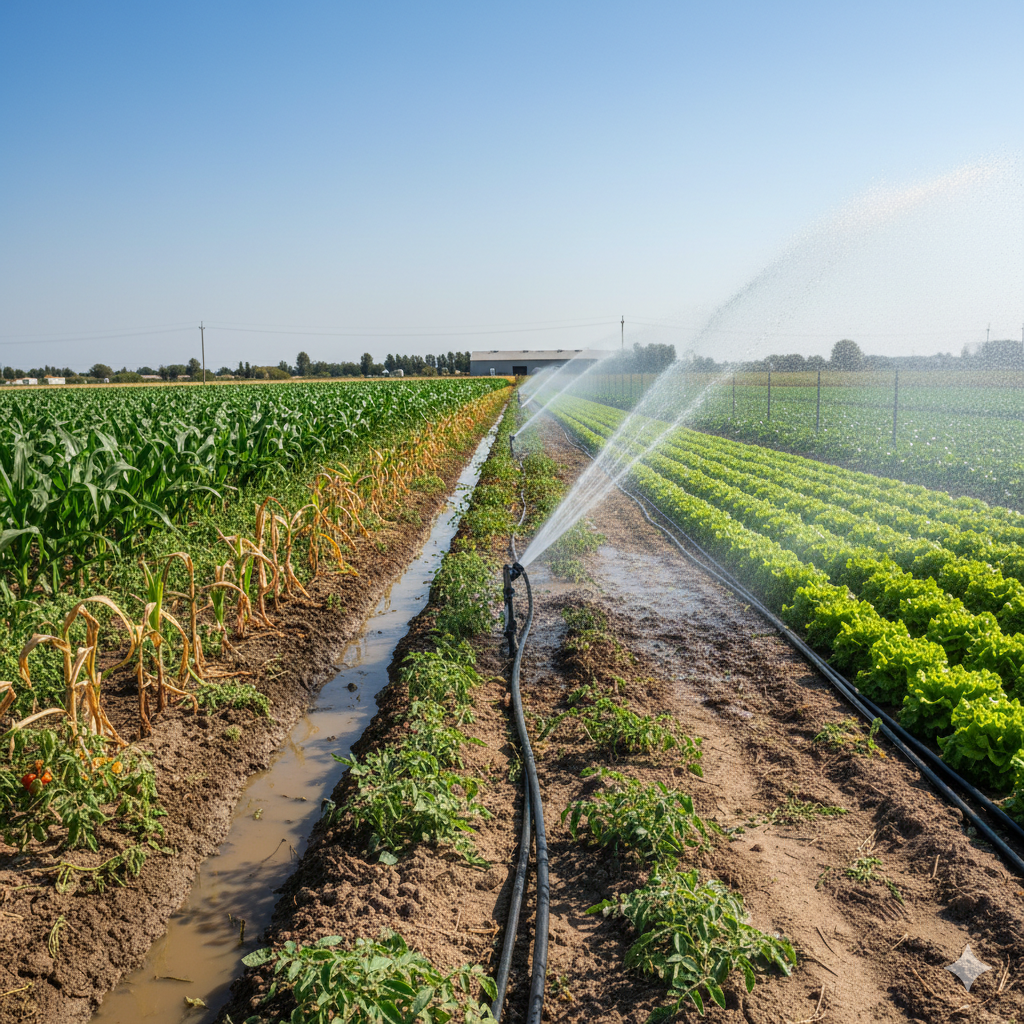
Sprinkler irrigation distributes water through pressurized pipes and spray nozzles, mimicking natural rainfall.
It is commonly used in:
Field crops
Pastures
Large farming areas
How Sprinkler Irrigation Works
Water is pumped under pressure and sprayed into the air through:
Fixed sprinklers
Portable sprinklers
Center pivot or lateral move systems
This method wets the soil surface evenly over a wide area.
Key Differences Between Drip and Sprinkler Irrigation
Understanding the fundamental differences helps make the right decision.
Water Application Method
Drip irrigation applies water directly to roots
Sprinkler irrigation sprays water over the crop canopy and soil surface
Coverage Area
Drip targets specific plants
Sprinklers cover entire fields
Pressure Requirement
Drip works at low pressure
Sprinklers require higher pressure
Water Efficiency Comparison
Water efficiency is one of the biggest deciding factors today.
Drip Irrigation Water Efficiency
Delivers water exactly where needed
Minimal evaporation loss
Little to no runoff
Efficiency can reach 90–95%
Sprinkler Irrigation Water Efficiency
Some water lost to evaporation and wind drift
Uniform coverage but less targeted
Efficiency typically 70–85%
Winner: Drip irrigation
Drip clearly outperforms sprinklers in water conservation, especially in dry and hot climates.
Crop Suitability: Which Crops Work Best?
Different crops respond differently to irrigation methods.
Crops Best for Drip Irrigation
Vegetables
Fruits and berries
Orchards and vineyards
Greenhouse crops
Drip irrigation is ideal for high-value crops that require precise watering.
Crops Best for Sprinkler Irrigation
Wheat
Corn
Rice (non-flood areas)
Pastures and fodder crops
Sprinklers are better suited for large-scale field crops.
Soil Type Considerations
Soil texture plays a major role in irrigation performance.
Drip Irrigation and Soil Types
Works well in sandy and loamy soils
Prevents deep percolation losses
Maintains optimal soil moisture
Sprinkler Irrigation and Soil Types
Suitable for most soil types
Can cause runoff on heavy clay soils
Risk of surface crusting in some conditions
Drip irrigation offers better control in soils with poor water retention.
Climate and Weather Impact
Climate conditions heavily influence irrigation efficiency.
Drip Irrigation in Different Climates
Excellent for hot, dry, and windy regions
Minimal evaporation loss
Consistent performance year-round
Sprinkler Irrigation in Different Climates
Performs well in cool and calm weather
Wind can cause uneven water distribution
Higher evaporation in hot climates
For harsh climates, drip irrigation works better overall.
Installation and Initial Cost Comparison
Cost is often a deal-breaker for farmers.
Drip Irrigation Costs
Higher initial installation cost
Requires filtration system
Needs careful design and layout
Sprinkler Irrigation Costs
Lower upfront cost (especially portable systems)
Easier to install
Less technical setup
Short-term winner: Sprinkler irrigation
Long-term value: Drip irrigation
Maintenance and Operating Costs
Maintenance affects long-term profitability.
Drip Irrigation Maintenance
Emitters can clog if water is not filtered
Requires regular flushing
Lower energy costs due to low pressure
Sprinkler Irrigation Maintenance
Nozzle wear and tear
Higher fuel or electricity usage
More moving parts in large systems
Over time, drip irrigation often results in lower operating costs.
Impact on Weed Growth and Crop Health
Irrigation affects more than just water delivery.
Drip Irrigation Benefits for Crop Health
Less weed growth
Reduced fungal diseases
Dry leaves reduce pest pressure
Sprinkler Irrigation Effects
Encourages weed growth
Wet foliage increases disease risk
Can cool crops during heat stress
Drip irrigation provides better crop health control.
Fertilizer Application and Nutrient Efficiency
Modern farming relies heavily on precise nutrient delivery.
Fertigation with Drip Irrigation
Fertilizers delivered directly to roots
Higher nutrient absorption
Reduced fertilizer waste
Fertilizer Use with Sprinklers
Less precise
Higher nutrient loss
Uneven application possible
For nutrient efficiency, drip irrigation is the clear winner.
Suitability for Small Farms vs Large Farms
Farm size matters when choosing irrigation.
Best Choice for Small Farms
Drip irrigation works best for:
Small to medium farms
High-value crops
Limited water supply
Best Choice for Large Farms
Sprinkler irrigation works better for:
Large land areas
Field crops
Mechanized operations
Each system has its place depending on scale.
Environmental and Sustainability Factors
Sustainability is no longer optional.
Drip Irrigation and Sustainability
Conserves water
Reduces soil erosion
Minimizes chemical runoff
Sprinkler Irrigation and Sustainability
Moderate water efficiency
Higher energy usage
Potential runoff issues
From an environmental perspective, drip irrigation is more sustainable.
Common Mistakes When Choosing Between Drip and Sprinkler
Farmers often make avoidable mistakes.
Choosing based only on cost
Ignoring water availability
Not considering crop type
Underestimating maintenance needs
The best choice is always context-specific, not one-size-fits-all.
So, Drip vs Sprinkler Irrigation: What Works Better?
The answer depends on your farming goals.
Choose drip irrigation if:
Water is limited
You grow high-value crops
You want maximum efficiency
Long-term savings matter
Choose sprinkler irrigation if:
You farm large areas
You grow field crops
Initial budget is limited
Water supply is adequate
Conclusion
When comparing drip vs sprinkler irrigation, there is no universal winner—but there is a right choice for every farm. Drip irrigation excels in water efficiency, crop health, and sustainability, making it ideal for precision farming and high-value crops. Sprinkler irrigation, on the other hand, remains a practical and cost-effective solution for large-scale field operations.
By carefully evaluating your crop type, soil, climate, water availability, and budget, you can select the irrigation system that delivers the best results for your farm today and long into the future.